When it comes to human-made tools, everybody can rattle off a list: cars, electricity, furniture, nearly everything we use to get through daily life, right down to the internet. But among that growing list are the words that roll off our tongues from the very moment we can get them out.
One would think that human-made tools could only be changed by the same hands that created them. However, language and the concepts they represent are controlled by more than just humans. Definitions can change before we even realize it.
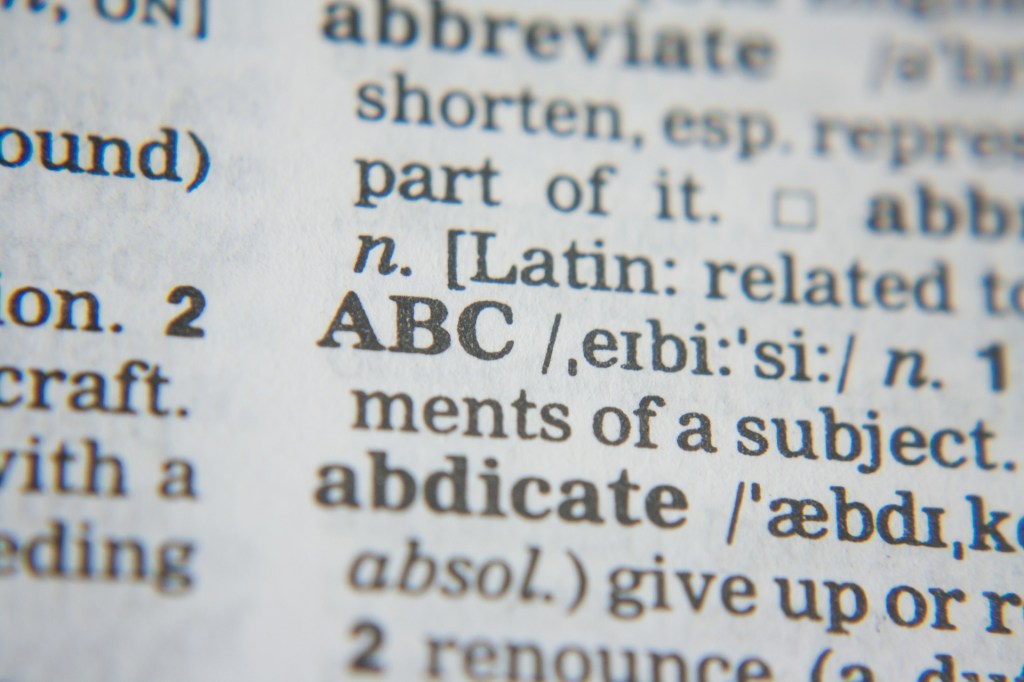
The second entry in Merriam-Webster explaining redefinition states, “To reexamine or reevaluate especially with a view to change.” In some cases, we look at a word and realize that it needs to evolve for our current situation. Yet, people in general aren’t too excited about change. There is a lot in this world that distracts us from such constant and incremental shifts. While we try to grasp the details of our routines, the movement of time doesn’t stop and takes the lead on evolving our words.
Every season, feeling and tradition has a collection of word associations, brought on by the repetition and continuation of life. Those associations are the little ways that we try to bring back memorable emotions. The impact of time stops for a second and it feels like nothing has changed, a feeling that can be both magical and deceiving. No matter how much we try to ignore the process of growth, layers are added to our language and feelings without much input from us. More often than not, redefinition happens to the most mundane words that we don’t easily notice right away.
Think back to 2019 when the words remote, distance, and open, were simple definitions. One was an object and a work option, the other a unit of measurement, and the last a simple signal to allow access. Over the course of one year, remote became a required way of interaction. Distance was measured methodically and became a main unit of pandemic safety. Open, this simple four letter word, had us all holding our breath, waiting for some signal of progress. Due to the impact of COVID-19 on the world, these words will never go back to a simpler form, at least not in our lifetimes.
Historic shifts in our joined fabric, especially ones that bring such a large wave of grief like COVID-19, are some of the few times when the unseen power of redefinition feels describable. Yet, there are small and inevitable moments when new definitions set in for the few things we try to guard from the passage of time.
A few weeks ago, I returned to a music festival for the first time since leaving for college in 2016. This one weekend after Labor Day was a staple of my childhood, since my first time attending at three-months-old. Fast-forward through getting my degree and a global pandemic, I was right back on the same grounds, regretting all those years I took this festival for granted. Every single landmark was the same. However, as I was walking around, something felt physically and mentally out of place. Why was I standing in a crowd, overwhelmed to the point of tears? This place was always a second home and here I was feeling like a stranger. The truth was, seven years had unfolded between the version of myself who had left and the version who came back. I had tried to hide the fact that this experience would ever change, ignoring the amount of history which had happened in the gap. With that in mind, I had to undergo the process of reintroducing myself to my own tradition. For a few days, the only thing I could do was embrace the growing pains, to keep such a jarring shift from tainting what I had waited for.
Since there is no proven way to physically stop the passing of time, such complicated pangs of growth, even within our dictionaries and conversations, aren’t going to stop. Nevertheless, if we give ourselves permission to move with the tide rather than fight it, we might recognize history unfolding in the smallest of words.
 McDonough Editorial
You must be logged in to post a comment.