Is it a hyphen or a dash? Does this word actually need it? Which one needs which? The evolving world of punctuation has many debates, but none of them quite measure up to the question of hyphen vs. dash. Instead of searching for guidance from a school study guide, refresh with this breakdown of professional examples that relate to your everyday writing.
Using the rules from the current Associated Press Style Guide (AP) and Chicago Manual of Style, each situation will tell you which mark you need and where it belongs. Since we are dealing with handwritten examples, the size of the marks may not be exact.
Hyphens
Basic hyphen

In the basic rules of hyphenation, both Chicago and AP call for a hyphen when a modifier precedes the noun in a sentence. Many modifiers that can be understood without the hyphen will lose the mark if it follows the noun.
One word compounds

When dealing with one word compounds, there is only one occasion where hyphens are involved. AP says that if a modifier is in front of a one word compound, the modifier is attached to the first half of the compound. Think of it in terms of this example, workspace is one word and hybrid is the modifier. Workspace is fractured to connect hybrid more closely, and show the type of work they are discussing. Keep in mind, not all compound words can make sense when they’re fractured. Yet in terms of this example, there’s no clarity lost.
Well compounds

A number of common compounds have well- attached as the first half. By AP’s rules, words beginning with well need to be hyphenated. Since well has a number of different meanings in a singular form, the hyphen ensures you have the correct context. In the example here, it’s clear that they are talking about the quality of the client relationship and not an actual established well.
The very/-ly exception

If the word very or any adverb ending in -ly is part of a two word phrase before your noun, there isn’t a need for hyphenation. Reading the example, you’ll notice that there is no issue by letting very costly stand without support and there is little chance for any ambiguity.
Phrasal verb exception

Phrasal verbs happen when an adverb and a regular verb create a phrase. They are one of the few hyphen exceptions when it comes to compound verbs. Almost see is the phrasal verb here. Think of it in terms of modifiers, the adverb almost modifies the regular verb see and therefore creates a phrasal verb. Even if they are connected, the hyphen would look out of place in this context.
Compound verbs

Regular verbs can form normal hyphenated compounds. In the example’s structure, second is in verb form and paired with the verb guess. Therefore, in the interest of clarity, the mark is required. By using the hyphen, this context clearly states the doubt from the compound verb and nothing else.
Multiple modifiers

When dealing with multiple modifiers, the suggested limit is three unless more are unavoidable. All-or-nothing is three elements only requiring two hyphens, and many multiple modifiers that you see are done in threes. If anything else was added to modify the example’s mindset even further, there is a risk of losing overall clarity. However, in those rare extended cases, put the hyphen on the last modifier in the list before the noun.
Suspensive hyphenation: multiple elements

Hyphens can do more than just link compounds. In some cases, hyphens shorten the line of modifiers in a sentence because they share a common word. The shortening function of a hyphen is called suspensive hyphenation. In the current instance, the modifiers are joined by the word or and show multiple elements, like multiple different discussions. Each time slot is a modifier to the noun. Instead of inserting or between every single time frame, the hyphen connects them into one phrase.
Suspensive hyphenation: single element
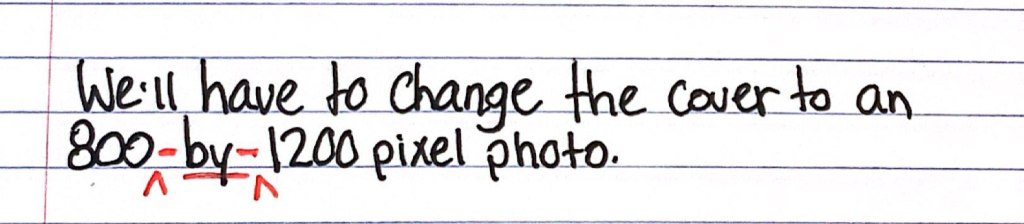
Now, there is also suspensive hyphenation dealing with single elements. Usually these modifiers are connected by using to or by. Here the hyphens connect both numbers to give the desired measurement of the photo. Remember, the placement of the modifiers in relation to the noun should be considered before you hyphenate.
Battle of the vowels

Other words that are hyphenated happen purely for the reader’s sake. In this case, it keeps from clashing double vowels making the word hard to read. However, the rule doesn’t apply to words that have double e’s, which is why you see a number of compound words without hyphens.
Clashing consonants

Much like the double vowel placement, hyphens also keep consonants from appearing in triples. Having to read something with three l’s right in a row would lead to reader confusion.
Em dash
AP Syle: the comma replacement

Em dash is the only kind of dash, besides hyphens, that AP uses. Among its few uses, em dashes can replace a comma when setting off a list that is already separated by commas. Let’s break it down a little bit more, the set of em dashes you see can easily be replaced by commas and remain correct. Since those listed tasks are not crucial to the overall meaning of the sentence, they are explanatory. The em dashes are there to signal the interruption for explanatory information, much like a set of commas would do.
Chicago: the em dash set
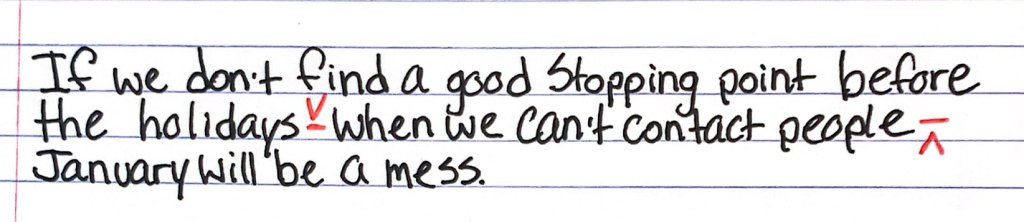
By the rules of Chicago style, em dashes can also replace commas in the same cases, but they take it one step further. Not only can em dashes replace commas but also parentheses and colons, when highlighting an explanatory phrase.
En dash
Chicago multiple modifiers

While AP uses hyphens for multiple modifier cases, Chicago uses an en dash. The change is miniscule when looking at the same example. Both styles call for multiple modifiers not to be overdone.
 McDonough Editorial
You must be logged in to post a comment.